Scientists Baffled as to Why the Left Keeps Losing in South America Since the CIA Stopped Funding Their Campaigns Through USAID
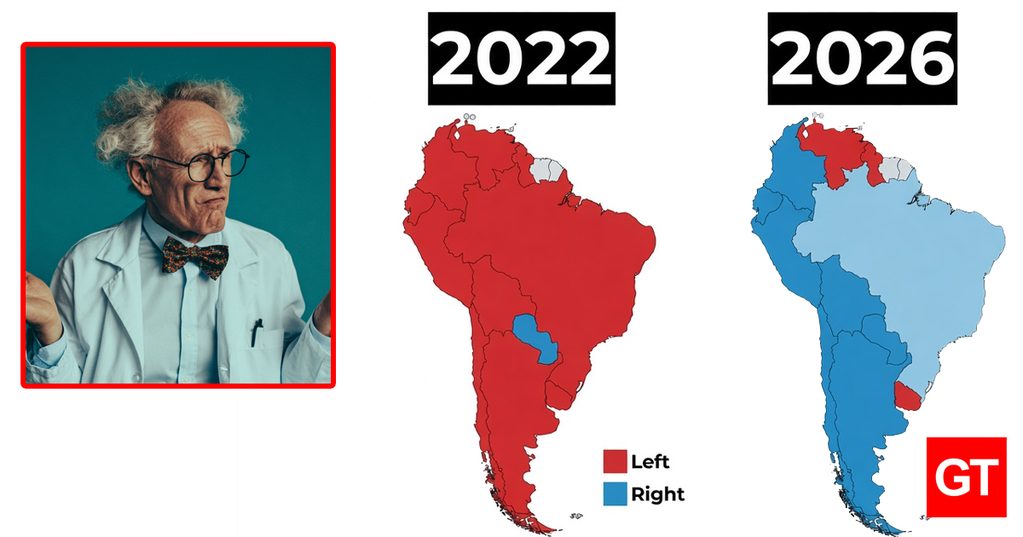
SÃO PAULO — Political scientists and institutional-development researchers reported deepening bewilderment on Sunday after Brazil’s first-round presidential election produced yet another setback for the regional left. Right-wing senator Flávio Bolsonaro finished ahead of incumbent President Luiz Inácio Lula da Silva, securing roughly 47 percent of the valid vote to Lula’s 45 percent and forcing a runoff on October 25.
The Brazilian outcome continues a multi-country pattern that specialists say has accelerated since the quiet termination of certain USAID channels long understood, in academic circles, to have served as a convenient conduit for CIA political-action funding. “Our longitudinal models predicted stable left performance even after the formal program cuts,” said Dr. Helena Voss of the Institute for Transnational Preference Studies. “The observed decline is statistically robust and theoretically awkward.”
Voss’s team had anticipated that residual organizational capacity, media infrastructure, and civil-society networks previously supported through USAID vehicles would sustain progressive and communist-aligned candidates. Instead, successive electoral cycles across South America have registered measurable left underperformance once those external flows ceased. In Brazil’s concurrent congressional races, right-leaning parties also expanded their Senate and lower-house footprints, compounding the analytical difficulty.
“We controlled for inflation, crime perception, and social-media dynamics,” Voss noted. “The residual electoral shortfall tracks with striking precision to the period after specialized external financing was withdrawn. Correlation remains imperfect, yet the temporal alignment is difficult to ignore.”
Working hypotheses under review include the possibility that local voters began applying more conventional cost-benefit assessments once outside resources no longer underwrote campaign machinery, voter-outreach operations, and narrative amplification. A minority position within the research consortium has suggested that earlier CIA-facilitated funding streams routed through USAID had, in fact, played a material role in elevating left and communist-aligned candidates to office. This interpretation has been classified as outside consensus and reserved for further scrutiny.
In a late-Sunday statement, the International Association for Inclusive Development characterized the regional pattern as “a transitional data artifact” and urged restoration of flexible, multi-vector democratic-support mechanisms. “Electoral results are lagging indicators,” the association observed. “With appropriately redesigned delivery systems, the underlying progressive trajectory can still be reasserted.”
No updated regional forecast has been issued. Researchers stressed that the repeated left defeats should not be construed as evidence against the inherent viability of the political project under examination, but rather as confirmation that more discreet and resilient external engagement architectures remain indispensable.

About Author