Biblical Scholars Conclude Fourth Horsemen of the Apocalypse Was a Feminist
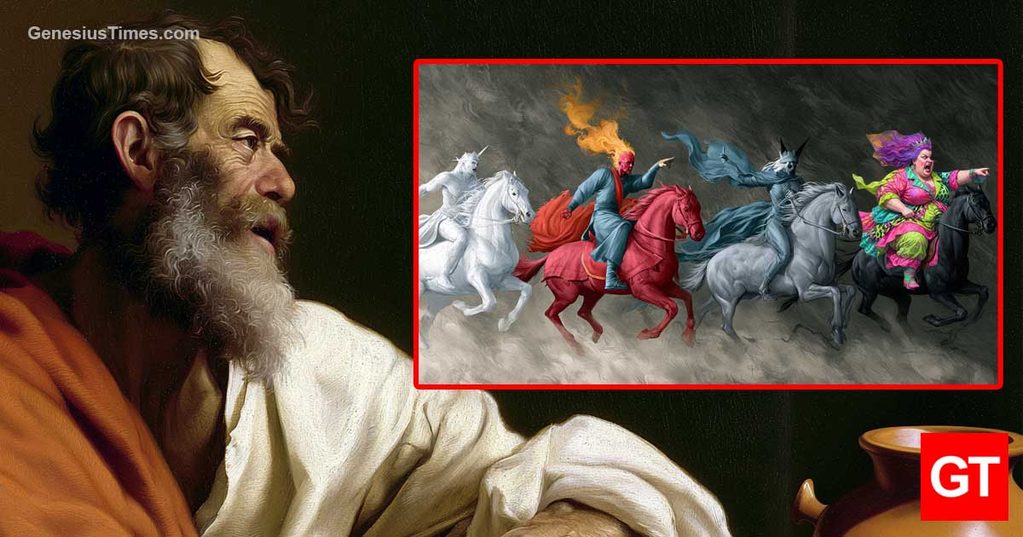
OXFORD — Leading biblical scholars have formally concluded that the black horse of the Apocalypse, traditionally identified as famine, was in fact a first-century vision of feminism.
In a peer-reviewed study published this week, researchers argue that the apostle John’s depiction of a rider holding scales has been systematically misinterpreted for nearly two thousand years. What earlier generations read as economic scarcity, the authors contend, was a prophetic forecast of the dismantling of traditional social hierarchies.
“The evidence is decisive,” said Dr. Helen Voss of the University of Cambridge, principal investigator on the project. “The black horse does not signify the absence of grain. It signifies the recalibration of power, the questioning of established roles, and the irreversible disruption of inherited order. John saw feminism. We simply lacked the conceptual vocabulary to name it until now.”
The study places the black horse in deliberate sequence after the red horse of conflict and before the pale horse of death, a progression the authors describe as historically and theologically coherent.
A minority of traditionalists continue to insist the passage concerns literal famine. Their objections, the paper notes, rely on outdated literalism and fail to engage the text’s deeper structural meaning.
The Society of Biblical Literature has acknowledged the findings without issuing a formal correction to existing translations. No immediate revisions to Revelation 6 are planned.
The other three horsemen remain unrevised.

About Author