Trump Stocks Reflecting Pool with Man-Eating Piranhas to Deter Purple-Haired Vandals
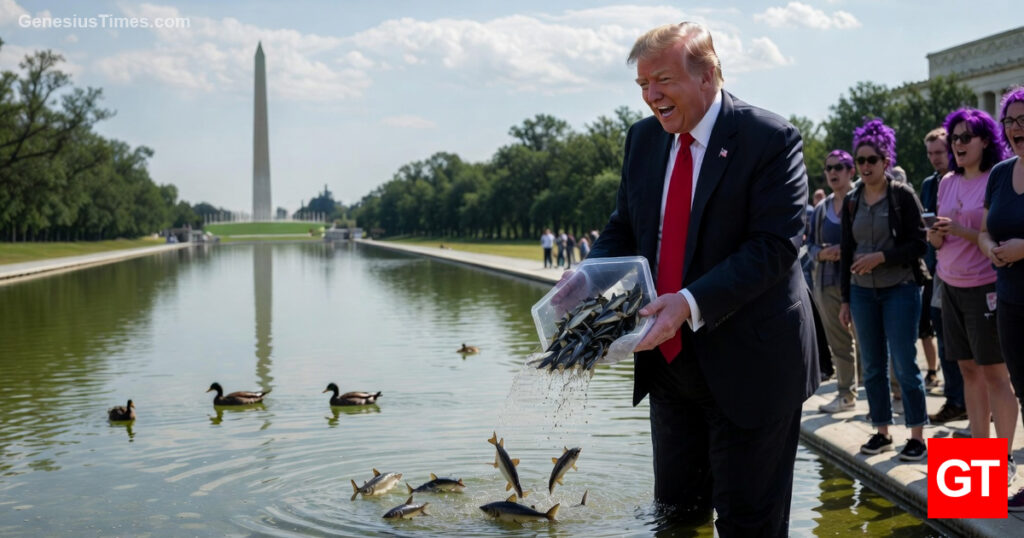
WASHINGTON — Citing ongoing concerns over “repeated acts of unauthorized aquatic protesting,” the Trump administration announced Tuesday that it has introduced several hundred South American red-bellied piranhas into the Lincoln Memorial Reflecting Pool as a proactive security enhancement.
White House officials described the measure as a “common-sense deterrent” against what they called a pattern of late-night vandalism by individuals with “distinctive purple hair coloration and a noted aversion to personal responsibility.” The pool, a shallow 18-inch-deep basin popular with Instagram influencers and climate activists, has reportedly seen multiple incidents of slogan-daubing, statue-adjacent encampments, and unsanctioned bathing in recent years.
“These fish are highly effective at maintaining order,” said Press Secretary Karoline Leavitt. “They don’t discriminate. They just do their job.”
Initial reports indicate the piranhas, sourced from a licensed supplier in Florida and acclimated to the capital’s water chemistry, have already reduced unscheduled gatherings by an estimated 87%. Park Police confirmed that three individuals were treated for minor lacerations after attempting to wade into the pool around 2 a.m. while carrying buckets of biodegradable glitter paint. All three were cited for trespassing and released with instructions to seek medical attention if symptoms of excessive bleeding developed.
Environmental groups expressed measured outrage. “Introducing an invasive species into a national monument is reckless,” said a spokesperson for the Center for Biological Pretension. “These fish could disrupt the delicate ecosystem of discarded protest signs and reusable water bottles that has thrived here for years.”
Critics on cable news panels described the policy as “barbaric,” “medieval,” and “a clear violation of the Geneva Conventions on decorative water features,” though none could cite the specific article. Several Democratic lawmakers have demanded hearings, arguing that less lethal alternatives—such as strongly worded signs or additional park rangers—were never fully explored.
Administration sources noted that the piranhas were selected after careful study of other options, including alligators (too large for the shallow pool) and electric eels (excessive paperwork). Feeding protocols will be minimal, officials added, relying primarily on “whatever wanders in after dark.”
The National Park Service has installed discreet warning signage reading “NO WADING — FISH MAY BE HUNGRY.” Early visitor feedback has been largely positive, with several tourists describing the occasional surface thrashing as “surprisingly educational.”
No injuries to waterfowl or small dogs have been reported as of press time.

About Author