Sentenced to 35 Years in Jail? Ask Your Doctor About ‘Not Murdering People for No Good Reason’
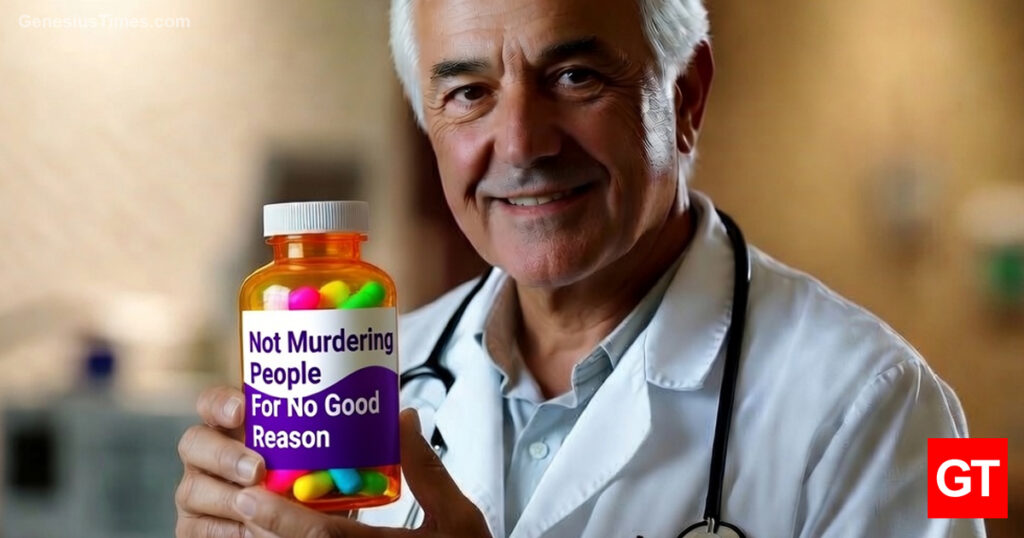
As a physician with over 25 years in clinical practice, I see patients every day who are struggling with the devastating consequences of poor decision-making.
Many present with symptoms that include lengthy incarceration, loss of civil liberties, and the sudden evaporation of future prospects.
If this describes you or a loved one, it may be time to speak with your doctor about a proven intervention: not murdering people for no good reason.
Clinical data are remarkably consistent.
Individuals who refrain from homicide tend to avoid the well-documented sequelae of long prison terms—shank wounds, institutional food, and the erosion of personal relationships.
In fact, observational studies (i.e., watching the news and reading court reports) show that patients who adopt this simple behavioral modification experience markedly lower rates of orange jumpsuits and court-mandated appearances.
Important Safety Information
Not murdering people is generally well-tolerated.
Common side effects include continued employment, family gatherings that do not require metal detectors, and the ability to vote without special accommodations.
In rare cases, patients report mild inconvenience when provoked by minor irritants such as traffic or perceived slights on social media.
Should these occur, your doctor may recommend first-line therapies such as counting to ten, taking a walk, or simply minding your own business.
Who Should Not Use Not Murdering People?
This approach is contraindicated in patients with a history of repeated, premeditated violence for trivial motives.
Tell your doctor if you have experienced thoughts of solving interpersonal disputes with lethal force, as alternative management strategies (e.g., actual therapy or basic moral reasoning) may be required.
Do not abruptly stop murdering if you have been doing so chronically without first consulting a licensed professional, as sudden cessation has been associated with temporary feelings of regret and legal accountability.
Talk to Your Doctor Today
If you or someone you know has recently been sentenced to 35 years, ask whether Not Murdering People is right for you.
A 30-second conversation during your next annual physical could prevent decades of taxpayer-funded housing in a maximum-security facility.
Remember: lifestyle modifications remain among the most cost-effective interventions in modern medicine.
Side effects of Not Murdering People may include improved sleep, lower insurance premiums, and the faint but persistent sensation of being a functional member of society.
In post-marketing surveillance, most patients describe these effects as “tolerable” or even “preferable.”
The choice is yours.
But as your physician, I must advise: results may vary if you continue choosing violence over, say, therapy or basic self-control.

About Author