“Are You Not Validated?” – Elliot Page Gladiator Remake Review
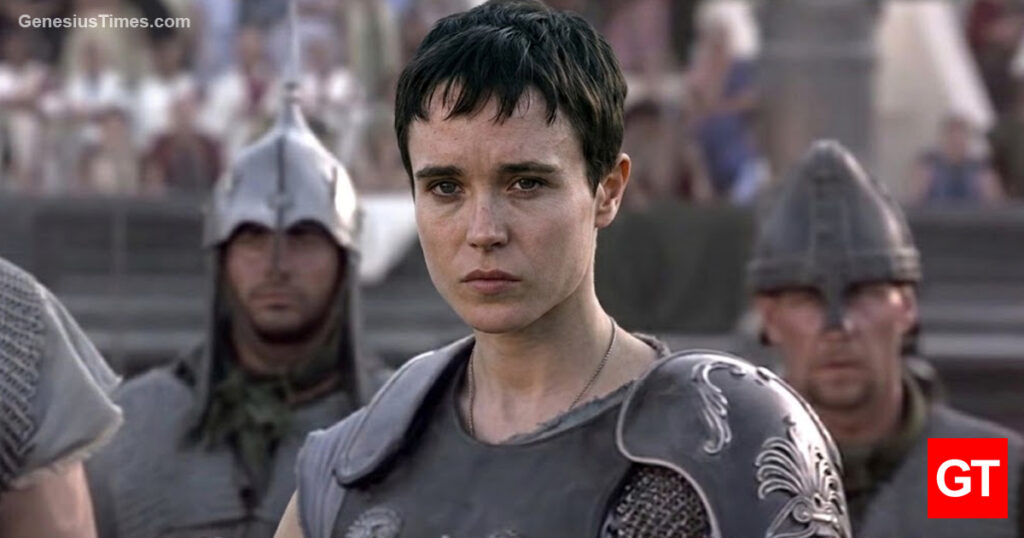
In what can only be described as a courageous act of historical scholarship, Ridley Scott—or whoever was contractually obligated to direct this—has reimagined Gladiator for the modern age.
Gone is the sweaty, brooding Russell Crowe. In his place stands Elliot Page as Maximus Decimus Meridius, a man of few words and, apparently, even fewer testosterone receptors.
The film opens much like the original: Roman legions, Germanic barbarians, sweeping cinematography. Then Maximus is betrayed, captured, and sold into slavery. The audience waits for the familiar roar of vengeance.
Instead, we get a thoughtful 12-minute montage set to ambient lo-fi beats where Maximus journals about the intersectional oppression inherent in the Roman Empire’s rigid gender binary. The crowd in the Colosseum seemed confused, but perhaps they simply hadn’t read the syllabus.
Page’s performance is… committed. He delivers the iconic “Are you not entertained?” line with the weary resignation of someone who would really rather be doing a panel at a gender studies conference.
The once-thundering battle cry now lands as a gentle suggestion that perhaps the audience should interrogate their bloodlust. Several extras in the arena were visibly moved. Others just checked their phones.
The supporting cast does its best to keep a straight face. Joaquin Phoenix returns as Commodus, though this time his incestuous madness is reframed as a valid expression of neurodivergence.
The script generously gives him several monologues about toxic masculinity, which he performs while wearing what appears to be a bedsheet and a deep sense of personal betrayal that the role wasn’t recast.
The action sequences are competently staged, if somewhat undermined by the frequent cuts to Maximus explaining to fellow gladiators that violence is a construct of the patriarchy and that true strength lies in vulnerability.
One particularly dry moment sees Maximus refuse to kill a fallen opponent because “he too is a victim of empire.” The opponent then stabs him. It’s all very layered.
Visually, the film is stunning. The Colosseum has never looked better, even if the gladiatorial combat now includes trigger warnings and safe words.
The final act delivers the emotional payoff audiences have come to expect: a rain-soaked duel, a dying hero, and a closing voiceover that reminds us the real battle was the friends—and pronouns—we made along the way.
Verdict: A bold, necessary deconstruction of the male power fantasy. Or a $250 million act of performance art. Possibly both.
Historians will study this one, if only to understand how a civilization reached the point of casting Elliot Page as its greatest warrior and calling it progress.
Rating: ★★★☆☆
(Three stars for the production design, minus two for pretending this was a good idea.)
Would I recommend it? Only if you enjoy watching Western civilization engage in a very expensive mid-life crisis.

About Author