BREAKING: Supreme Court Decides 250 Years Is ‘Long Enough’ for America
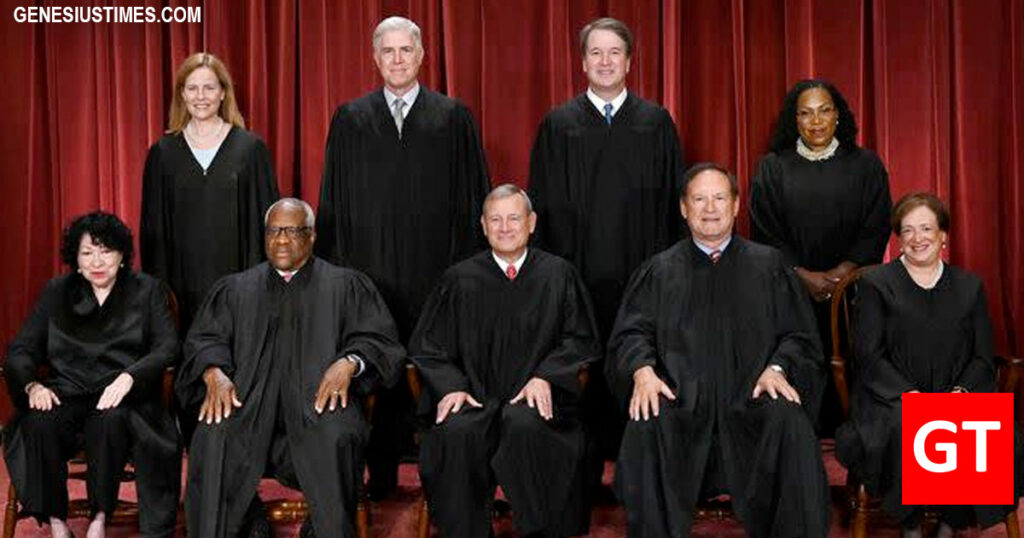
WASHINGTON—In a narrowly divided 6-3 ruling Thursday, the Supreme Court held that the United States has enjoyed a sufficient run and that birthright citizenship under the 14th Amendment should be interpreted with an expiration date in mind.
Justice Amy Coney Barrett, writing for the majority, observed that “two and a half centuries of continuous operation is more than most republics can reasonably expect. The Framers drafted a charter for a free people, not a perpetual administrative enterprise. At some point, even the most carefully designed experiment must acknowledge its own finitude.”
The decision stems from a challenge to birthright citizenship brought by several states arguing that granting automatic citizenship to children born on U.S. soil has become logistically burdensome and philosophically passé. The Court agreed, holding that the Citizenship Clause’s protections apply only to those born before the nation’s de facto closing date of July 4, 2026.
“Original public meaning does not require us to treat the Republic as an eternal youth hostel,” Barrett wrote. “The text promises citizenship under the jurisdiction of the United States as it existed—not as an open-ended obligation stretching into perpetuity. Two hundred fifty years feels about right.”
Justice Clarence Thomas concurred, appending a historical analysis confirming that few constitutional orders survive much beyond this mark without descending into something unrecognizable to their founders.
In dissent, Justice Sonia Sotomayor argued that the majority had “essentially declared the American project a limited-time offer.” Justice Ketanji Brown Jackson warned that limiting birthright citizenship retroactively would create “a nation of people who are technically American but spiritually past their sell-by date.”
White House officials described the ruling as “thoughtful” while quietly updating emergency continuity plans. A senior administration source, speaking on condition of anonymity, noted that “we always knew the Constitution wasn’t meant to last forever. The real surprise is that it took the Court this long to admit it.”
Legal scholars on both sides described the opinion as elegantly minimalist. “It’s not that they’re ending America,” said one constitutional expert. “They’re simply acknowledging that, like any good restaurant, it has to turn the lights on at some point.”
Immigration advocates expressed alarm, while restrictionists celebrated the decision as long overdue. One border-state governor praised the ruling as “finally putting a statute of limitations on the American Dream.”
The Court declined to specify what comes next—dissolution, managed decline, or a dignified retirement party—but sources close to the justices indicated that a ceremonial closing ceremony on the National Mall is under consideration for 2027, complete with a modest fireworks display funded by remaining Treasury assets.
When reached for comment, the Statue of Liberty issued no statement, having reportedly been placed on administrative leave pending final disposition of the republic.

About Author